
Unlock the Key Success Factors for your DevOps Initiatives!
The 7 dimensions of a DevOps initiative
Why propose a new model? Is it reinventing the wheel?
As soon as you see an article presenting a new model, these questions naturally arise. Before designing this model with seven dimensions, I studied those proposed by frameworks and consulting firms. There are many of them, developed from different perspectives (Lean, Digital, Engineering, Leadership, Management, etc.), each with its own vocabulary.
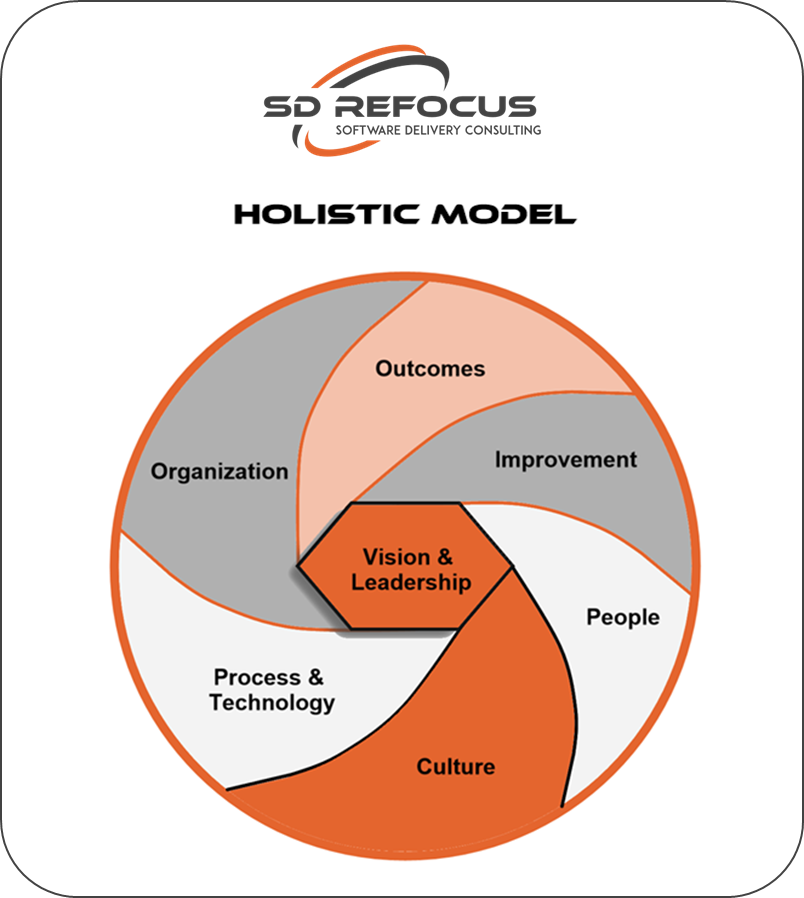
Unable to find a model that matched my own experience, I decided to design a holistic model covering the different facets of a DevOps transformation initiative.
A Holistic Model of the Facets of a DevOps Transformation
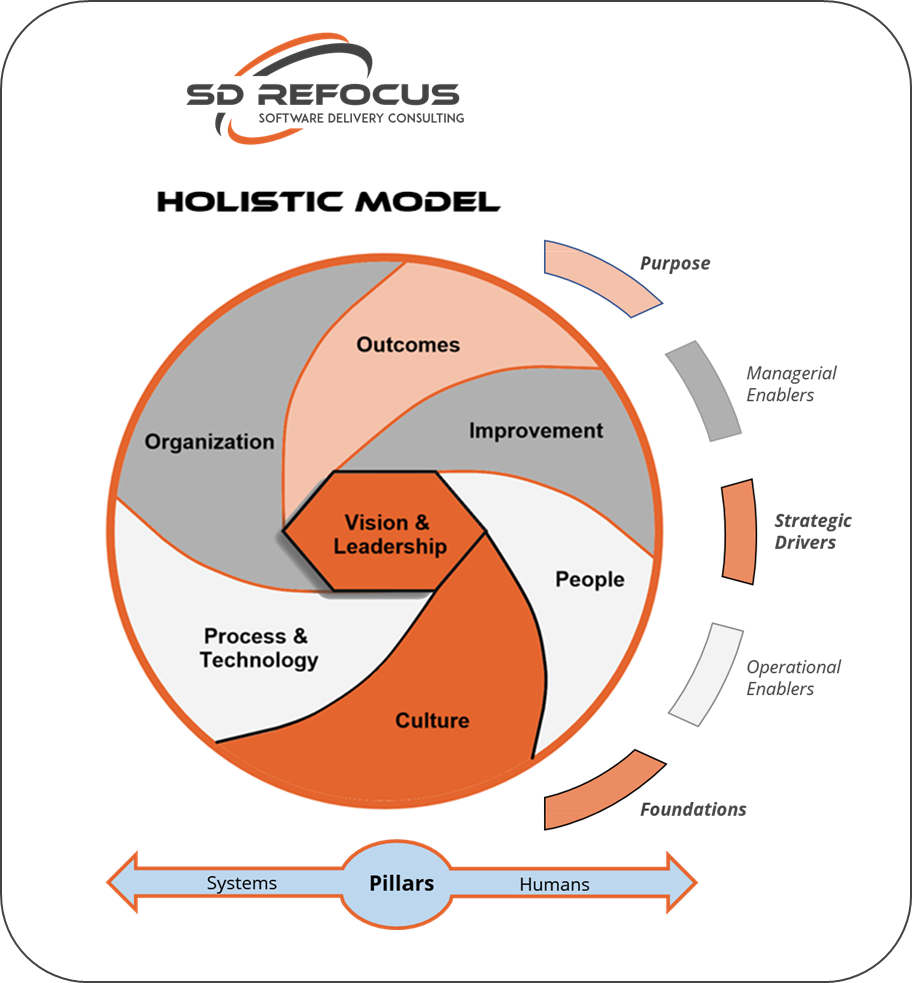
The model covers both Operational Enablers (people, processes, and technologies) and Managerial Enablers (organization and improvement).
It clearly places Leadership in a key role at the heart of the implementation of such an initiative, with Cultural aspects underpinning all dimensions and Outcomes as the purpose for aligning the overall approach.
The model also results from the choice of visual representations:
- A circular shape symbolizes a holistic 360° view of dimensions;
- A photographic metaphor to focus on the dimensions that are important in a given context.
Lean Principles for Creating a Dynamic of Continuous Improvement
Although dimensions provide an overview of an initiative, the key to success lies in the dynamics of continuous improvement!
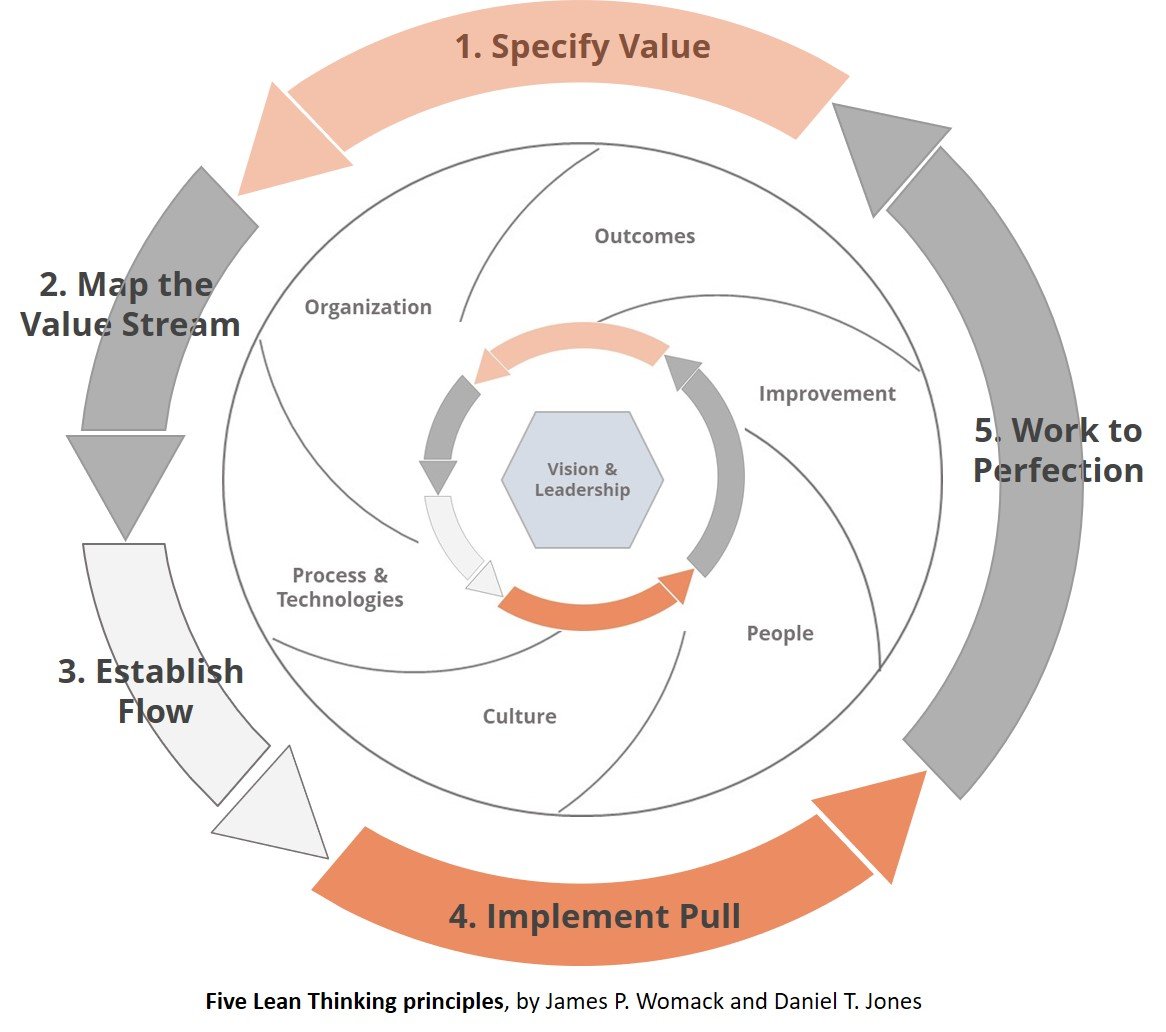
To develop and implement their vision, leaders of DevOps initiatives can draw on the five principles of lean thinking:
- Specify customer value and the outcomes to be achieved;
- Identify and map value streams involving multiple organizational functions;
- Establish a smooth flow of work by improving processes, leveraging technology, and developing team skills;
- Pull the flow from real customer needs and feedback;
- Progress step by step towards perfection, so that the number of steps and the time required to serve customers continually improve.
A Model for Refocusing Software Delivery on What Really Matters
Even though they bring real benefits, transformation initiatives (agility, DevOps/DevSecOps, SRE, etc.) do not always succeed in demonstrating their effects on the value realized by customers and their impact on the company's business results.
« We believe that members of software value streams can apply lean principles to refocus on what really matters in their specific situation. »
Two key characteristics and reasons for adopting a lean approach:
- Focus on customer satisfaction in order to align all stakeholders with a common vision and corporate objectives;
- Combine technical and human dimensions in a systemic approach, rather than focusing on technological implementation and local optimizations within each specialized group.
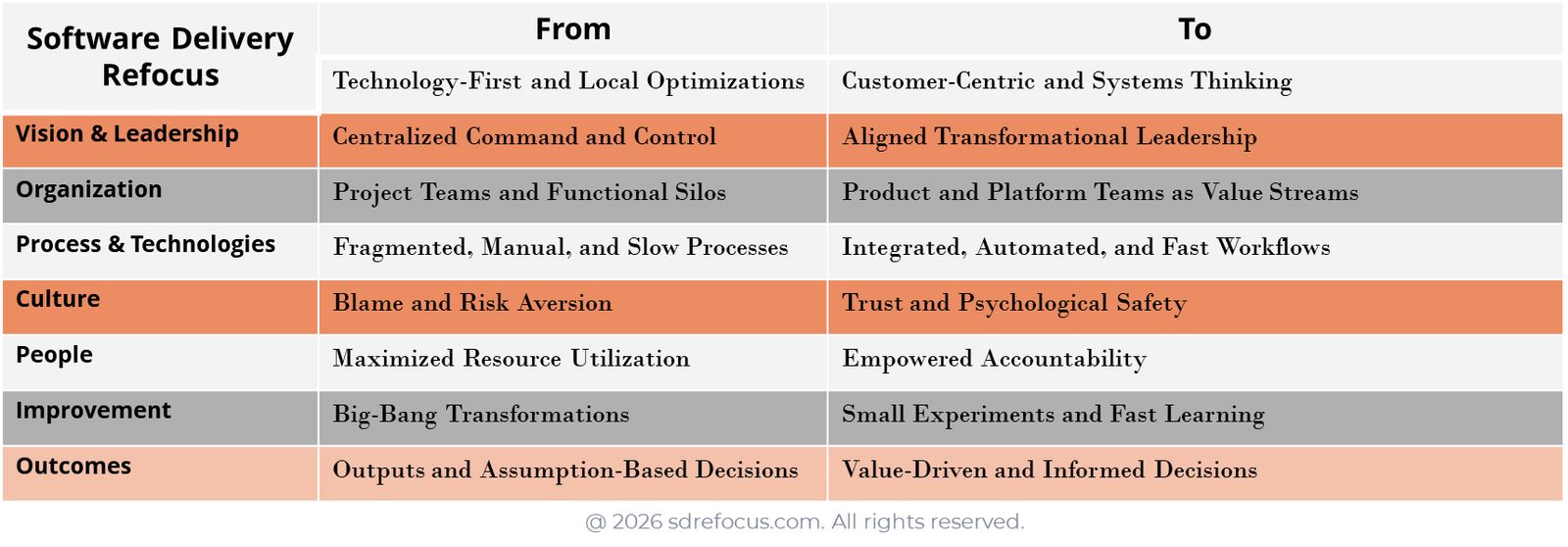
Depending on its specific situation and needs, an organization may need to transition from traditional to modern practices in software delivery. The summary table below presents the major trends observed in each dimension:
Adopting a Scientific Approach to Progress Step by Step
It would be delusional to think that a single dimension can solve everything, or that it is enough to identify the first or most important one.
« All dimensions are interconnected, forming a complex socio-technical system. »
To reduce this complexity, it is necessary to proceed in small steps, formulate hypotheses, experiment to remove one obstacle or constraint at a time, measure the results, and compare them with the initial hypothesis. In other words, a scientific approach must be adopted to solve software delivery problems.
Conclusion
This model was developed because we couldn't find any description of the dimensions encountered in DevOps initiatives. If you know of any other equivalent models, please share them in the comments or contact us (pcorbard@sdrefocus.com).
This modeling exercise also serves to clarify the approach taken to help SD ReFocus clients with their DevOps initiatives. The model has already evolved and will likely continue to evolve with use, feedback, and trends in our disciplines.
Finally, this model appears to be sufficiently generic to be applied to other transformation initiatives.